Where to find a dependable custom polo t-shirt supplier for bulk orders?
Within China's vast textile manufacturing industry system, precisely identifying a reliable supplier for bulk custom Polo T-shirts requires strategic assessment. The global market size of custom clothing is expected to exceed 100 billion US dollars, with an annual growth rate stable at 5-7%, highlighting the huge demand. As the largest textile and garment production base in China, Guangdong Province accounts for approximately 40% of the national output value. Many high-quality factories specializing in custom Polo T-shirts, such as suppliers located in Zhongshan, Dongguan and other places, have an annual output of several million to tens of millions of pieces. These factories are equipped with large-scale automated cutting machines (with cutting efficiency increased by over 50%) and advanced digital direct printing equipment (capable of meeting small-batch custom orders, with the minimum order quantity reduced to 50-100 pieces). At the same time, it has a stable production capacity to handle large-scale orders of 5,000 pieces or even more than 50,000 pieces. In 2021, a large textile group in Dongguan efficiently delivered over 2 million custom Polo T-shirts with a unified logo to an international chain catering enterprise, fully demonstrating the strong supply capacity of a reliable custom polo t-shirt supplier.
Ensuring product quality is the core consideration when choosing a supplier. The key quality indicators include defect rate (AQL Level 2.5 is a generally accepted standard in the industry, allowing a maximum of 6.5 minor defects per 100 pieces) and color fastness (usually required to reach grade 4-5). Such as the GB/T 3921 standard for washing fastness and dimensional tolerance (for example, the dimensional tolerance of chest circumference is generally controlled within ±1.5 cm). It is crucial to rely on suppliers with authoritative certifications (such as GOTS, Oeko-Tex Standard 100, ISO 9001). Certified factories have a compliance probability of fabric safety and standardized production processes exceeding 98%. A partner of a well-known e-commerce platform in Shanghai was forced to recall goods worth over 800,000 RMB due to a 12% increase in consumer skin allergy complaints for using cheap Polo shirts lacking Oeko-Tex certification. A professional custom polo t-shirt supplier usually provides 3 to 5 pre-production samples for free before delivery and strictly adheres to the sample sealing system to ensure that the quality deviation of bulk goods is controlled within ±3% of the actual measured data.
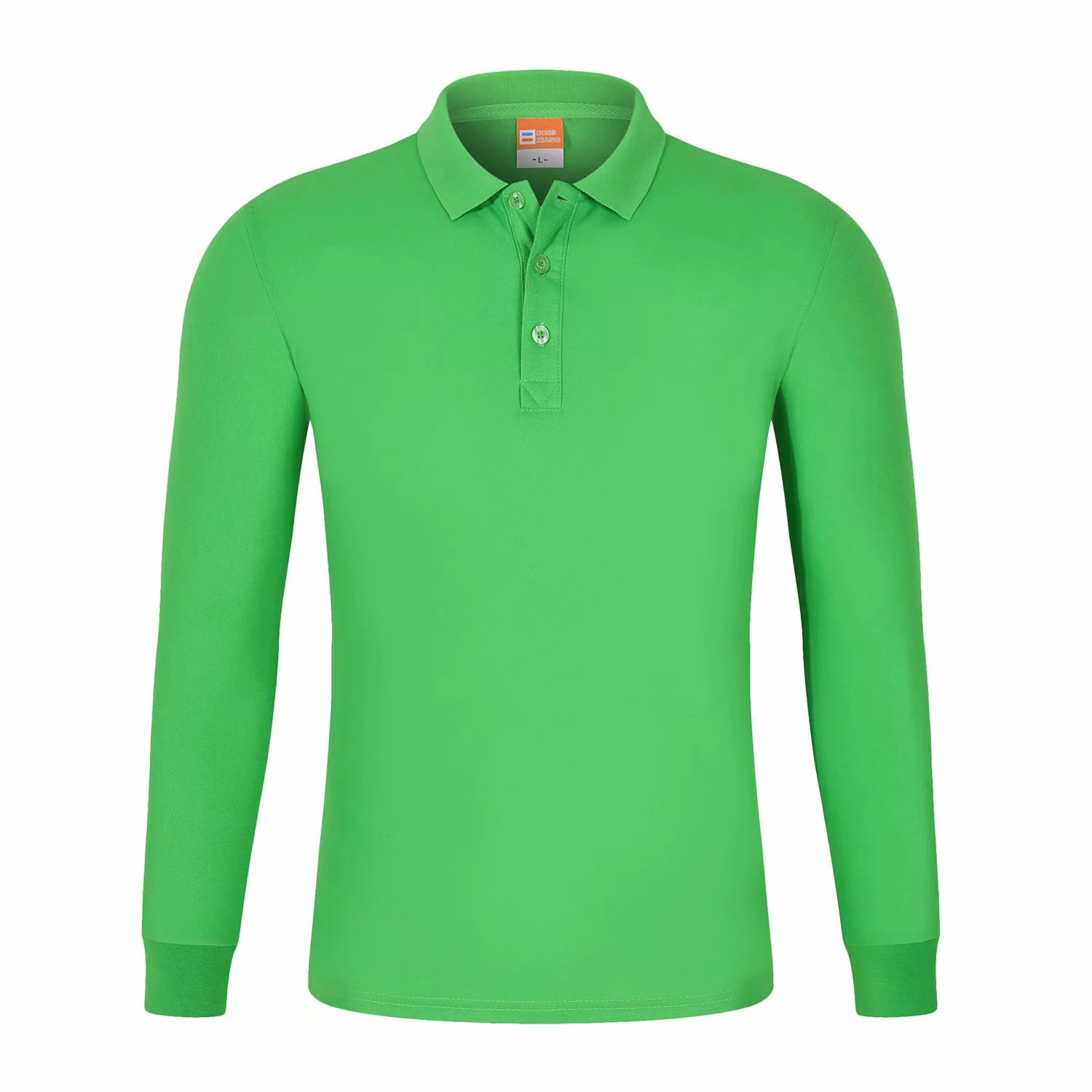 Clarifying the cost structure and the minimum order quantity (MOQ) is the basis of negotiations. The basic wholesale price of standard pure cotton Polo shirts usually fluctuates within the range of ¥25 to ¥45 per piece The specific price is determined by the fabric weight (common 180g, 210g, 250g), yarn count (such as 40-count combed cotton), accessories (for example, the cost of YKK brand zippers is 30-40% higher than that of ordinary zippers), and the order quantity (the cost can be reduced when the order quantity reaches 10,000 pieces) An impact of 10-15%. Customized processes such as printing and embroidery significantly increase costs: simple single-color screen printing may increase by ¥2 to ¥5 per piece, while full-page digital printing may increase by ¥10 to ¥20 per piece. Complex embroidery (such as logos with more than 10,000 stitches) will cost more. The total cost of customized services usually increases by 25% to 60% on top of the base price. Suppliers have different minimum order quantity requirements for large-scale orders: mature large factories usually accept customization at the level of 300 to 500 pieces, but for orders with complex processes or special fabrics, they may require more than 1,000 pieces. A well-known sports brand in Suzhou has optimized the unit customization cost by 18% by combining screen printing and partial embroidery in its 20,000-piece group uniform order, significantly enhancing the cost performance.
The stability of the supply chain and the response speed ultimately determine the success or failure risk coefficient of the project. It is crucial to request the standard production cycle from the supplier. For regular custom orders, it usually takes 25 to 35 days from confirming the pre-production sample to the completion of the bulk goods. Among them, the sampling-making process takes 3 to 5 days, and the fabric procurement and inspection take 7 to 10 days (if the fabric in stock is available, it will be shortened to 1 to 3 days). The production of bulk goods is scheduled for 10 to 15 days. Efficient custom polo t-shirt suppliers typically have an order on-time delivery rate of over 98% and apply ERP/MES systems to track order progress in real time. At the end of 2022, a multinational IT company urgently needed 10,000 new Polo shirts for its global annual meeting. A supplier from Shenzhen, with its lean production process and intelligent inventory system, successfully compressed the total delivery cycle to 18 days, avoiding millions of dollars in event delay losses. Suppliers with supply chain resilience typically maintain an additional production line redundancy configuration of 15% to 25% and have established a diversified and verifiable network of secondary fabric alternative suppliers. To minimize the adverse effects brought about by fluctuations in raw material prices (such as the annual fluctuation range of cotton prices sometimes reaching ±20%) and potential supply chain disruptions (for instance, the reduction in international logistics capacity causing shipping delays of over 14 days). Outstanding suppliers will keep the production progress update frequency within 48 to 72 hours, providing a highly transparent traceability information flow. Choosing a custom polo t-shirt supplier that deeply integrates regional production capacity layout, strict process control and digital supply chain management system can significantly reduce the complexity risks brought by customization and ensure the efficient and accurate implementation of a large number of orders.
Clarifying the cost structure and the minimum order quantity (MOQ) is the basis of negotiations. The basic wholesale price of standard pure cotton Polo shirts usually fluctuates within the range of ¥25 to ¥45 per piece The specific price is determined by the fabric weight (common 180g, 210g, 250g), yarn count (such as 40-count combed cotton), accessories (for example, the cost of YKK brand zippers is 30-40% higher than that of ordinary zippers), and the order quantity (the cost can be reduced when the order quantity reaches 10,000 pieces) An impact of 10-15%. Customized processes such as printing and embroidery significantly increase costs: simple single-color screen printing may increase by ¥2 to ¥5 per piece, while full-page digital printing may increase by ¥10 to ¥20 per piece. Complex embroidery (such as logos with more than 10,000 stitches) will cost more. The total cost of customized services usually increases by 25% to 60% on top of the base price. Suppliers have different minimum order quantity requirements for large-scale orders: mature large factories usually accept customization at the level of 300 to 500 pieces, but for orders with complex processes or special fabrics, they may require more than 1,000 pieces. A well-known sports brand in Suzhou has optimized the unit customization cost by 18% by combining screen printing and partial embroidery in its 20,000-piece group uniform order, significantly enhancing the cost performance.
The stability of the supply chain and the response speed ultimately determine the success or failure risk coefficient of the project. It is crucial to request the standard production cycle from the supplier. For regular custom orders, it usually takes 25 to 35 days from confirming the pre-production sample to the completion of the bulk goods. Among them, the sampling-making process takes 3 to 5 days, and the fabric procurement and inspection take 7 to 10 days (if the fabric in stock is available, it will be shortened to 1 to 3 days). The production of bulk goods is scheduled for 10 to 15 days. Efficient custom polo t-shirt suppliers typically have an order on-time delivery rate of over 98% and apply ERP/MES systems to track order progress in real time. At the end of 2022, a multinational IT company urgently needed 10,000 new Polo shirts for its global annual meeting. A supplier from Shenzhen, with its lean production process and intelligent inventory system, successfully compressed the total delivery cycle to 18 days, avoiding millions of dollars in event delay losses. Suppliers with supply chain resilience typically maintain an additional production line redundancy configuration of 15% to 25% and have established a diversified and verifiable network of secondary fabric alternative suppliers. To minimize the adverse effects brought about by fluctuations in raw material prices (such as the annual fluctuation range of cotton prices sometimes reaching ±20%) and potential supply chain disruptions (for instance, the reduction in international logistics capacity causing shipping delays of over 14 days). Outstanding suppliers will keep the production progress update frequency within 48 to 72 hours, providing a highly transparent traceability information flow. Choosing a custom polo t-shirt supplier that deeply integrates regional production capacity layout, strict process control and digital supply chain management system can significantly reduce the complexity risks brought by customization and ensure the efficient and accurate implementation of a large number of orders.
Clarifying the cost structure and the minimum order quantity (MOQ) is the basis of negotiations. The basic wholesale price of standard pure cotton Polo shirts usually fluctuates within the range of ¥25 to ¥45 per piece The specific price is determined by the fabric weight (common 180g, 210g, 250g), yarn count (such as 40-count combed cotton), accessories (for example, the cost of YKK brand zippers is 30-40% higher than that of ordinary zippers), and the order quantity (the cost can be reduced when the order quantity reaches 10,000 pieces) An impact of 10-15%. Customized processes such as printing and embroidery significantly increase costs: simple single-color screen printing may increase by ¥2 to ¥5 per piece, while full-page digital printing may increase by ¥10 to ¥20 per piece. Complex embroidery (such as logos with more than 10,000 stitches) will cost more. The total cost of customized services usually increases by 25% to 60% on top of the base price. Suppliers have different minimum order quantity requirements for large-scale orders: mature large factories usually accept customization at the level of 300 to 500 pieces, but for orders with complex processes or special fabrics, they may require more than 1,000 pieces. A well-known sports brand in Suzhou has optimized the unit customization cost by 18% by combining screen printing and partial embroidery in its 20,000-piece group uniform order, significantly enhancing the cost performance.
The stability of the supply chain and the response speed ultimately determine the success or failure risk coefficient of the project. It is crucial to request the standard production cycle from the supplier. For regular custom orders, it usually takes 25 to 35 days from confirming the pre-production sample to the completion of the bulk goods. Among them, the sampling-making process takes 3 to 5 days, and the fabric procurement and inspection take 7 to 10 days (if the fabric in stock is available, it will be shortened to 1 to 3 days). The production of bulk goods is scheduled for 10 to 15 days. Efficient custom polo t-shirt suppliers typically have an order on-time delivery rate of over 98% and apply ERP/MES systems to track order progress in real time. At the end of 2022, a multinational IT company urgently needed 10,000 new Polo shirts for its global annual meeting. A supplier from Shenzhen, with its lean production process and intelligent inventory system, successfully compressed the total delivery cycle to 18 days, avoiding millions of dollars in event delay losses. Suppliers with supply chain resilience typically maintain an additional production line redundancy configuration of 15% to 25% and have established a diversified and verifiable network of secondary fabric alternative suppliers. To minimize the adverse effects brought about by fluctuations in raw material prices (such as the annual fluctuation range of cotton prices sometimes reaching ±20%) and potential supply chain disruptions (for instance, the reduction in international logistics capacity causing shipping delays of over 14 days). Outstanding suppliers will keep the production progress update frequency within 48 to 72 hours, providing a highly transparent traceability information flow. Choosing a custom polo t-shirt supplier that deeply integrates regional production capacity layout, strict process control and digital supply chain management system can significantly reduce the complexity risks brought by customization and ensure the efficient and accurate implementation of a large number of orders.