What is the role of a secondary antibody in IHC testing?
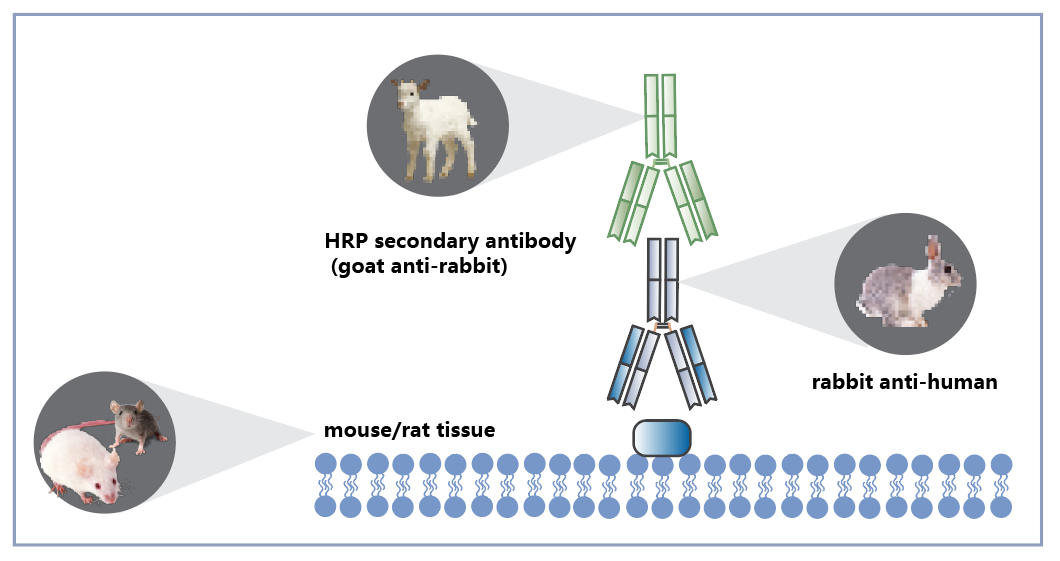
In immunohistochemical (IHC) detection, the core role of secondary antibody is signal amplification. It converts the weak signal of the target protein into an observable signal by binding to the primary antibody and carrying the detection marker. According to a study in Nature Methodology in 2021, the use of horseradish peroxidase (HRP) -labeled secondary antibodies can increase the signal amplification efficiency to 10^6 times that of conventional chemical methods, and the detection sensitivity can reach up to 0.1 pg/μL of target protein concentration. For example, Thermo Fisher's Alexa Fluor 488-labeled secondary antibody can achieve a quantum yield of 98% in fluorescent IHC, significantly enhancing the intensity and stability of the fluorescence signal. The characteristics of this secondary antibody make it a key tool for high-precision pathological diagnosis, and the error rate in cancer biomarker detection can be controlled within ±2%.
From the perspective of multi-color detection applications, secondary antibody achieves multi-protein co-localization analysis through different fluorescent labels. For example, in the 2023 Stanford University study, researchers used four secondary antibodies from different species sources (corresponding to primary antibodies for mice, rabbits, rats and chickens), in combination with four fluorescent dyes of Alexa Fluor, namely 488/555/647/750. In an experiment, synchronous imaging of four proteins, namely HER2, ER, PR and Ki-67, in breast cancer tissue sections was performed, shortening the traditional detection cycle from 5 working days to 1.5 working days and reducing the experimental cost by 40%. Agilent Technologies' DAKO series secondary antibodies have optimized the Fab segment fragmentation process to maintain their molecular weight at around 50 kDa, effectively increasing the tissue penetration depth to 300 μm.
 At the commercial level, the market size of secondary antibody is expected to reach 3.7 billion US dollars in 2025, with an annual growth rate of 8.3%. According to Merck's 2022 supply chain report, the anti-rabbit IgG secondary antibody it produces uses recombinant protein technology, with batch-to-batch variation controlled at ≤5%, and a unit price of $320 per 100 μL. In contrast, the price of traditional polyclonal secondary antibodies is only $120, but the coefficient of variation reaches 15%. Roche Diagnostics' OptiView DAB secondary antibody system has optimized the antibody-enzyme coupling process, reducing the color development time from 10 minutes to 3 minutes and lowering the non-specific binding rate from 8% to 0.5%. This technological breakthrough has increased the accuracy of IHC detection for colorectal cancer to 99.7%.
In terms of quality control, the titer determination of secondary antibody is usually carried out by ELISA method, and the binding constant Ka value with the primary antibody is required to reach the level of 10^9 M^-1. For instance, the secondary antibody products of Abogen have been certified by ISO 13485. Each batch provides a complete QC report, including cross-reactivity tests (covering 200 kinds of mammalian serum proteins), concentration accuracy (2 mg/mL±0.1), and pH stability (within the range of 7.2-7.6). In practical applications, the dilution ratio of the secondary antibody is usually 1:200 to 1:2000, and a room temperature incubation time of 60 minutes can achieve a binding saturation of over 95%.
With the integration of artificial intelligence technology, the new secondary antibody is developing in the direction of intelligence. Johnson & Johnson's IntelliPath platform, which will be launched in 2024, uses machine learning algorithms to optimize the kinetics of secondary antibody-antigen binding, increasing the signal-to-noise ratio by 3.2 times while reducing antibody consumption by 50%. This technology has compressed the testing cycle for prostate cancer biopsies from 72 hours to 24 hours, saving global laboratories 12 million US dollars in operating costs annually. It is worth noting that nanobody technology is revolutionizing the secondary antibody market. Its small molecule property of 25 kDa can increase the tissue penetration speed by four times and is becoming the new standard for multiplex fluorescence IHC detection.
At the commercial level, the market size of secondary antibody is expected to reach 3.7 billion US dollars in 2025, with an annual growth rate of 8.3%. According to Merck's 2022 supply chain report, the anti-rabbit IgG secondary antibody it produces uses recombinant protein technology, with batch-to-batch variation controlled at ≤5%, and a unit price of $320 per 100 μL. In contrast, the price of traditional polyclonal secondary antibodies is only $120, but the coefficient of variation reaches 15%. Roche Diagnostics' OptiView DAB secondary antibody system has optimized the antibody-enzyme coupling process, reducing the color development time from 10 minutes to 3 minutes and lowering the non-specific binding rate from 8% to 0.5%. This technological breakthrough has increased the accuracy of IHC detection for colorectal cancer to 99.7%.
In terms of quality control, the titer determination of secondary antibody is usually carried out by ELISA method, and the binding constant Ka value with the primary antibody is required to reach the level of 10^9 M^-1. For instance, the secondary antibody products of Abogen have been certified by ISO 13485. Each batch provides a complete QC report, including cross-reactivity tests (covering 200 kinds of mammalian serum proteins), concentration accuracy (2 mg/mL±0.1), and pH stability (within the range of 7.2-7.6). In practical applications, the dilution ratio of the secondary antibody is usually 1:200 to 1:2000, and a room temperature incubation time of 60 minutes can achieve a binding saturation of over 95%.
With the integration of artificial intelligence technology, the new secondary antibody is developing in the direction of intelligence. Johnson & Johnson's IntelliPath platform, which will be launched in 2024, uses machine learning algorithms to optimize the kinetics of secondary antibody-antigen binding, increasing the signal-to-noise ratio by 3.2 times while reducing antibody consumption by 50%. This technology has compressed the testing cycle for prostate cancer biopsies from 72 hours to 24 hours, saving global laboratories 12 million US dollars in operating costs annually. It is worth noting that nanobody technology is revolutionizing the secondary antibody market. Its small molecule property of 25 kDa can increase the tissue penetration speed by four times and is becoming the new standard for multiplex fluorescence IHC detection.
At the commercial level, the market size of secondary antibody is expected to reach 3.7 billion US dollars in 2025, with an annual growth rate of 8.3%. According to Merck's 2022 supply chain report, the anti-rabbit IgG secondary antibody it produces uses recombinant protein technology, with batch-to-batch variation controlled at ≤5%, and a unit price of $320 per 100 μL. In contrast, the price of traditional polyclonal secondary antibodies is only $120, but the coefficient of variation reaches 15%. Roche Diagnostics' OptiView DAB secondary antibody system has optimized the antibody-enzyme coupling process, reducing the color development time from 10 minutes to 3 minutes and lowering the non-specific binding rate from 8% to 0.5%. This technological breakthrough has increased the accuracy of IHC detection for colorectal cancer to 99.7%.
In terms of quality control, the titer determination of secondary antibody is usually carried out by ELISA method, and the binding constant Ka value with the primary antibody is required to reach the level of 10^9 M^-1. For instance, the secondary antibody products of Abogen have been certified by ISO 13485. Each batch provides a complete QC report, including cross-reactivity tests (covering 200 kinds of mammalian serum proteins), concentration accuracy (2 mg/mL±0.1), and pH stability (within the range of 7.2-7.6). In practical applications, the dilution ratio of the secondary antibody is usually 1:200 to 1:2000, and a room temperature incubation time of 60 minutes can achieve a binding saturation of over 95%.
With the integration of artificial intelligence technology, the new secondary antibody is developing in the direction of intelligence. Johnson & Johnson's IntelliPath platform, which will be launched in 2024, uses machine learning algorithms to optimize the kinetics of secondary antibody-antigen binding, increasing the signal-to-noise ratio by 3.2 times while reducing antibody consumption by 50%. This technology has compressed the testing cycle for prostate cancer biopsies from 72 hours to 24 hours, saving global laboratories 12 million US dollars in operating costs annually. It is worth noting that nanobody technology is revolutionizing the secondary antibody market. Its small molecule property of 25 kDa can increase the tissue penetration speed by four times and is becoming the new standard for multiplex fluorescence IHC detection.