How to Choose a Reliable Film Faced Plywood Supplier in Vietnam?
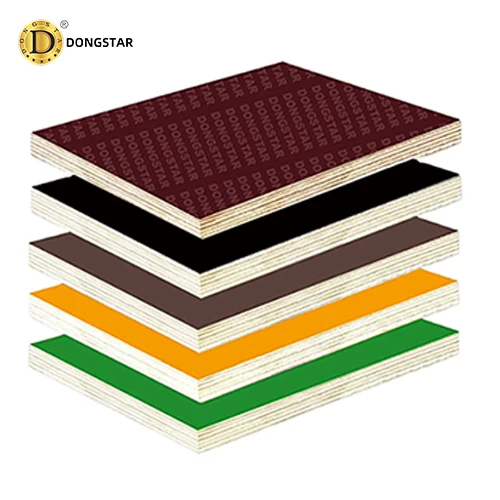
Vietnam currently maintains a 28% share of the global tropical plywood export market, yet inconsistencies in veneer density remain common. Selecting a Film Faced Plywood Supplier requires auditing their specific phenolic glue ratios—typically 280g to 320g per square meter—and validating FSC-certified supply chains to ensure structural longevity across 15 to 20 concrete pouring cycles in high-rise construction.
The global demand for high-performance formwork panels relies on technical precision within the manufacturing plant. Factory floor data indicates that producers utilizing automated hot-press systems achieve a thickness tolerance within 0.3mm across a standard 1220mm x 2440mm sheet.
Moisture content measurement serves as a primary technical metric for quality stability. Reliable production facilities enforce an 8% to 12% moisture range, verified by digital hygrometers on every pallet before the application of phenolic resin film.
Discrepancies in moisture levels often manifest as surface cracking when boards reach arid climates. Buyers should request specific laboratory reports from a 2025 production batch to confirm the structural integrity of the core wood species, typically prioritizing plantation-grown Acacia over lighter, porous alternatives.
Suppliers often utilize two distinct types of resin to adhere the film to the plywood core. Using premium phenolic resin allows the board to withstand 72 hours of boiling water exposure without delamination, a standard that separates top-tier manufacturers from those using cheaper melamine mixtures.
| Performance Indicator | Standard Grade | Premium Grade |
| Phenolic Glue Weight | 250g/sqm | 300g/sqm |
| Boil Test Duration | 24 Hours | 72 Hours |
| Density Tolerance | 0.5mm | 0.2mm |
High-output factories operate at a capacity exceeding 15,000 cubic meters per month, which necessitates rigorous internal quality management systems. Requesting an ISO 9001:2015 audit report allows a buyer to verify that the facility maintains consistent production records for every batch manufactured during the previous fiscal year.
Independent third-party inspection firms, such as Intertek or SGS, provide objective data regarding surface friction and bond strength. These organizations test samples taken from random spots in a 50-container shipment to ensure adherence to contract specifications.
The shift toward sustainable forest management has pushed manufacturers to adopt stricter tracking protocols for raw timber logs. Facilities displaying valid FSC-COC documentation demonstrate a verifiable chain of custody, ensuring that 95% of their timber inputs originate from legally managed plantation forests.
Logistics management also impacts the final condition of the plywood upon arrival at international ports. Ensuring the supplier utilizes moisture-resistant packaging and silica gel desiccant packs inside the container reduces the probability of surface mold by an estimated 40% during ocean transit.
| Shipping Metric | Requirement |
| Container Humidity | Under 15% |
| Pallet Wrapping | Polyethylene film |
| Edge Sealing | Acrylic paint |
When evaluating potential partners, ask for a detailed breakdown of their veneer arrangement, as asymmetrical structures lead to warping. Professional manufacturers use a symmetrical lay-up pattern where the thickness of the outer veneers matches the inner layers to maintain a balanced tension profile within the panel.
Successful sourcing involves reviewing the supplier's export history to specific regions. A facility that has consistently supplied the Japanese or European markets since 2020 possesses the necessary experience to manage the stringent formaldehyde emission standards, such as E0 or E1 grade requirements.
Production line automation directly correlates to the reduction of human error during the veneer layup process. Advanced plants now utilize laser-guided sensors to detect gaps in veneers smaller than 2mm, ensuring the final board possesses uniform strength across its entire surface area.
Building a long-term relationship with a manufacturer allows for custom adjustments to product specifications. Discussing requirements for specific concrete finishes early in the negotiation process ensures the supplier selects the appropriate film thickness—typically 120g/m2 or 160g/m2—to match the desired surface smoothness of the finished wall or slab.